Showing posts with label New Jersey. Show all posts

Saturday, April 2, 2011

Cooper Mill, NJ

We found the place pretty much by accident. It was on the way to somewhere else. We noted the old stone building with a historical marker set out front. We’d never noticed it previously; maybe, because we’d never stopped at this particular tavern (for lunch) before.

Cooper Mill was across the street. Perhaps, we’d still be clueless if the girl hadn’t seated us by the window. So, after our meal, we decided to go over and have a look. It was a mill alright, with two millstones set out front to weather, and sacks of grain in the windows. There was a wooden aqueduct that funneled in water from a pond across the street, providing power to the big red wheel in back of the building. We would learn that two 2000 lb. millstones still grind significant quantities of grain even today; that this particular stretch along the Black River was particularly well-suited for mills of this type because the river drops a full 20 ft. within a mere half mile. Archaeological exploration of the area discovered no less than 13 sites tied to water-powered industry, among them a second gristmill downstream, a saw mill, a mill to crush apples, one to distill cider into whiskey, and one to process wool.

The people at the visitor center (located just across the parking lot) would have been only too happy to give us a tour of the one remaining (grist) mill. We didn’t want to trouble them. They looked quite delicate, lounging around the old house in their frilly period costumes. It never occurred to us that they might have been bored.

Before leaving, we grabbed a handful of brochures, some of which contained trail maps of the area which, we learned, comprises the Morris County Black River Park System. The trails all begin (if anything can be said to begin anywhere) at Cooper Mill. Chubb Park, the Kay Environmental Center, Bamboo Brook and Willowwood Arboretum are destinations. We walked down as far as the waterfall that marked the end of Kay’s Pond. One of the brochures promised painted turtles sunning themselves on the rocks. We only found the ubiquitous Canada Geese and the occasional reptile.

Eventually, the shadows were beginning to lengthen and we decided to turn back. We didn’t fancy being out in the woods after dark. Even now there were strange rustlings emanating from the brush close beside the path. A discernible chill had descended that made us shudder with each new animal yelp echoing through the distance.

While retracing our steps back to the Mill, our thoughts turned to men like Isaiah Younglove who began a flour milling operation here as far back as the 1760’s; and Nathan Cooper who would go on to populate (what was once called) Milltown with descendants, helping to turn it into a thriving industrial community. These men - the early architects of what would become America’s Industrial Revolution - could hardly have been as squeamish as we, traipsing through this then pathless wood.

Petert Koelliker; pkoelliker8@yahoo.com

Monday, February 21, 2011

Delaware Water Gap National Recreation Area (NJ)


As a family, we’d been climbing Mt. Tammany at least a couple of times a year ever since our kids were babies. Back then, we carried them up the steep, rocky trail on our backs. Starting at the Dunnfield parking area, we would follow the red markings emblazoned on trees and rocks all the way up to where the earth literally opens up, revealing a broad ribbon of river below. Greedily gulping as much air as our lungs could hold we would settle back on the rocks - 1250 ft. above where we had left our car - and gaze down on a silent world. We’d see the cars and trucks moving along Rt. 80 of course but, from this height, they made no sound – like toys. Below us, too, hawks traced perfect ovals, clearly enjoying the fact that God had given them wings. In those days, our bodies were still well tuned and we never felt the strain of the climb.

Sometimes we’d go again in winter, when the air was dry and raw. The kids were bigger now; too big to be carried. They’d want to stop frequently and sit down by the side of the path, refusing to budge. “We’re tired,” they’d complain. Eventually, we’d be able to cajole them into going at least as far as the first spot from where one could see the valley open up below.

Years later, it would be the kids who’d literally drag us up the mountain. We were the ones who would shamelessly beg for cigarette breaks while our lungs were all but bursting. The kids were merciless, exhorting us to keep going, inadvertently (perhaps) but effectively shaming us for having neglected our health. Despite the pain, the view at the top remained a suitable reward. It had the effect of instant nirvana, facilitating a kind of “letting go”. Our bodies hummed with the rhythm of the universe; our heartbeats slowed, and suddenly we felt ourselves to be wiser than we’d ever been. A cigarette in celebration of this harmonious moment would signal the end of it. Down was easy; twenty minutes at the most; courtesy of gravity.

After the kids graduated and moved away, we too stopped going to the Gap. Then, one day, quite recently, we gathered enough courage to try it once more. Our health was better now. We had been eating better; we practiced yoga; we exercised; we had given up smoking. The climb up Tammany would be a test. Had our focus on healthier living paid any dividends at all? We could only hope.

We climbed quite sprightly. When we reached the top, we could honestly say we‘d been in worse shape. The view, of course, dwarfed all such concerns. We could have died and gone to heaven right then and there.

Peter Koelliker pkoelliker8@yahoo.com


Sunday, February 6, 2011

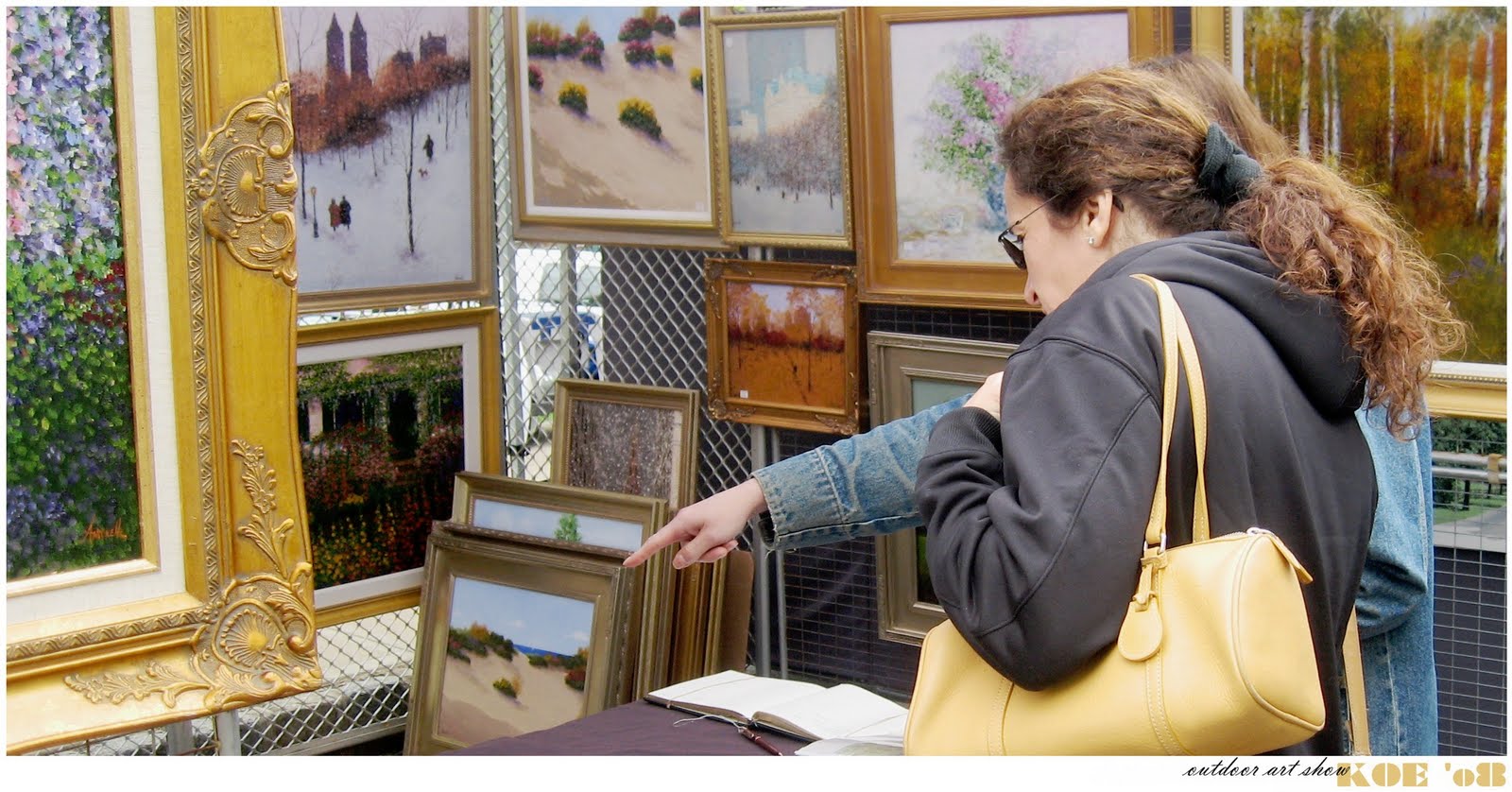
Art in Summit, NJ


On a recent visit to the town where I grew up in Germany, I noted that a lot of contemporary sculpture had inexplicably made inroads into the general landscape. I was told that the German government requires builders to solicit artwork to be displayed along side any new construction. The aim presumably is to give artists the opportunity to share in their community’s economic fortune – government-sponsored affirmative action for artists, if you wish.

I realize this column has visited Summit once before when we were discussing the Reeves-Reed Arboretum. Ironically, it was the man-made sculptures displayed there that drew our attention and not the roses, the daffodils, the sunflowers, hyacinths, etc. This time we return to Summit once more for here too modern sculpture has been cropping up in many of its public spaces. As it turns out, The Mayor’s Partnership for Summit Arts has been a force in bringing contemporary sculpture to the town so that people who may not necessarily be so inclined as to visit museums are also given the opportunity for accidental encounters (with modern art) just by going about their daily routines. Most works remain in place for about six months after which they are either moved to a new location or returned to the artist.

The program, in effect since 2004, has been successful in securing space for about 20installations in various parts of the city. The largest collection can be found in Wilson Park; but downtown, city hall, the high school and the train station have also become venues. In addition, three bus shelters along Broad Street have been outfitted with stained glass windows.

The Reeves-Reed Arboretum, of course, remains an attractive place for artists to display their work, as is the High School. These venues however have no direct connection to the Mayor’s Partnership.

Connection or not, there is no doubt that all manner of art has been cropping up in Summit. This has always been a town with a soft spot for the finer things in life. The restaurants here are first class. The Summit Playhouse has been around as long as I can remember. There is also an Opera House, though no longer used for its stated purpose (only the name remains). Summit is also the New Jersey Center for the Visual Arts which features rotating exhibitions by established artists as well as Center students in a bright, modern facility. Summer evenings often feature concerts in the park. And don’t forget the annual art show for which several streets in down town are closed to traffic.

It might be instructive to mention that, unlike in Germany, all this activity is supported privately. I still remember when the German government decided that anyone claiming affiliation with a church would be required to pay a “church tax”. This effectively contributed toward emptying the pews.

Peter Koelliker pkoelliker8@yahoo.com


Saturday, January 22, 2011

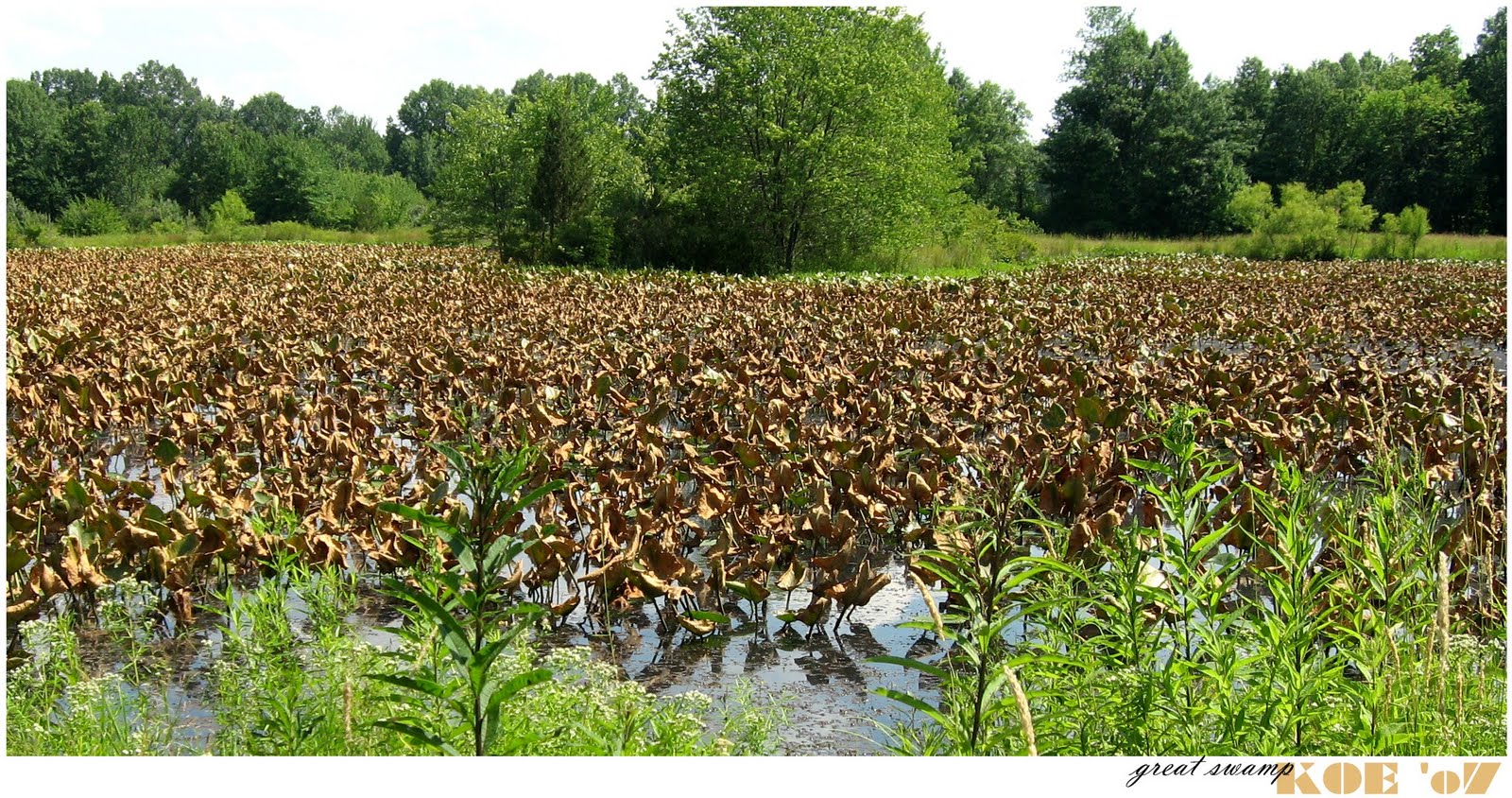
The Great Swamp, New Jersey, USA


It is simply amazing to me that so many green places still continue to exist, all within a 50 mile radius of New York City. Having grown up on the Jersey side of the Hudson, I’ve heard my state regularly maligned as consisting mostly of smokestacks and asphalt. It makes for clever one-liners, no doubt; you can’t help but smile (even while you curse the traffic jam you happen to be stewing in) but, you know, it simply isn’t true.

Take The Great Swamp, for instance. It’s a protected area administered by the U. S. Fish and Wildlife Service. Barely 26 miles from Times Square, it consists of 7,600 acres of varied habitats and has become home to literally hundreds of species of birds and animals. Thousands of plant varieties make the refuge a lung for this highly populated region.

As the name implies, much of the area consists of wetlands with its own unique semi-aquatic vegetation which is lush and green in the summer and starkly somber in winter. Each season here has its own particular charm. There is a series of well-maintained boardwalks that give the visitor a chance to enjoy this unique habitat without having to muddy his boots. There are also biking, hiking and waking trails.

Some years back, developers wanted to drain the swamp and build an airport there. The local population - not without political influence and financial clout - rose up and successfully lobbied against the project. As a result, it was decided that the already existing airport in Newark should be enlarged - and another wilderness area was saved.

The animal population in the swamp routinely spills over into the surrounding suburbs. For people living there, it is not unusual to see fox, deer, rabbits, turtles and wild turkeys in their yards. Deer alone are so prolific, a hunt is held annually in an effort to control the population. This invariably brings animal rights protestors out, but logic does seem to suggest that if the animal populations are not controlled in some way, many will go outside the refuge in search of food where they are likely to become traffic fatalities.

The Great Swamp is primarily known for bird watching. There are hundreds of bird species who use it to rest and feed during their annual migrations. Sound-proof bird blinds have been built for the patient birder to observe his often elusive prey.

Curiously, on a recent trip to wilds of Vermont, we saw almost no wildlife – not even a squirrel. I asked the locals about it. They simply shrugged and joked, “The animals, it seems, have all packed up and gone down to New Jersey,” they would say. I have yet to hear a plausible explanation for why this should be so.

Located on 16 acres adjacent to the Great Swamp is The Raptor Trust. This is where injured birds are mended and cared for until they can be released back into the wild. It is a privately funded enterprise and is open to visitors who wish to see owls, hawks, vultures, eagles as these are recuperating from some unfortunate accident. A small donation may be asked for at the gate. For directions and additional information, check out their web site:

http://www.funsprouts.com/raptor_trust.htm.


Sunday, January 2, 2011

Murray Hill Square; Murray Hill, NJ


Writers and social critics have not been shy in expressing their distaste for modern housing developments that feature cookie-cutter dwellings in tombstone-like rows, stretching as far as the eye can see. The genesis of this, of course was Levittown, LI, NY, a vast tract of identical houses built all at the same time. There was a demand for relatively cheap housing immediately after WWII and it was found that building cost could be reduced if the product could be mass-produced.

The now classic joke involves a man coming home from work and wandering into the wrong house because all the houses on his street look the same. Satirists appreciate this narrative so much, it has now become urban legend, appearing in the lyrics of popular songs as in well as in the movies. The funny thing is, despite the ridicule, builders still build this way and people still buy homes in such neighborhoods, even if these are not at all inexpensive. In fact, the price of a home in a planned community is often entirely dependent on location and the ring of the high-sounding moniker the builder was able to come up with.

We ourselves live in such a community for a time. It was actually somewhat of a rarity in that it consisted of three alternating architectural styles: Tudor, Colonial, and Mediterranean. In our immediate vicinity there were other developments, all built roughly within the same timeframe, that contained no variance in style whatsoever and which often were even more expensive.

I can’t say it bothered me particularly, living there. True, the first time I got lost as we all did before the days of GPS.

Still, the idea of living in a house exactly as one’s neighbor’s is strangely troubling. Perhaps this is why one is usually expected to pay a premium for a custom built home, though it may be older and smaller than similar new construction.

The other day, I took my camera to Murray Hill Square in Murray Hill, NJ, an unincorporated area located within portions of both Berkeley Heights and New Providence. Built relatively recently (early 1980’s), it breaks all the architectural rules of planned community construction. Each home there is patently unique.

The accompanying pictures will show that these could have been taken in Williamsburg, VA or in any other painstakingly preserved colonial American village. The homes are expensive. The upkeep of the public areas itself must amount to a small fortune. And, no doubt, the community’s close proximity to a whistle stop along the New York–Gladstone (rail) line adds to its desirability. Also within easy walking distance is a modest shopping center with a supermarket, a couple of restaurants, a (albeit temporary) post office and a liquor store. There may also be a dry cleaners; I forget.

Peter Koelliker; pkoelliker8@yahoo.com


Sunday, December 26, 2010

Whippany (NJ) Railway Museum


As a child, I remember reading a fairy tale entitled, "Seven-League Boots" and being fascinated by it. The premise was that if one were to wear such boots, one could travel seven leagues in a single bound. Clearly, the story was told before our time, when the idea of rapid transit was but a fantasy. The memory of that idea, however, would remain and, blessed by the power of human commitment, would, over time, evolve to produce the realization of cars, trains, and flying machines.

There is no doubt that railways played an important role in the development of our nation. There is also a huge romantic component which is still evident today as the mere mention of the names of the great railway companies continues to inspire awe in those who still celebrate successful shuttle launches, historic feats on battlefields and the election victories of great men who would go on to lead our nation to its present position as one of the world’s super powers. This parabolic rise in America’s fortunes can in no small part be attributed to the role played by its railroads.

As a child, I had always had an electric train in my arsenal of toys. My grandfather was an engineer for the SBB (the Swiss National Railroad). On my insistence, he would take me quite regularly to the switching yard in Zuerich to watch the trains maneuver gracefully over a virtual blizzard of switches and rails. At one time, I knew more about locomotives than I knew about my school mates; my family; myself, even. Sometimes I could even claim to ride the trains knowing that my grandfather was at the controls.

There’s no need to go all the way to Strasburg, PA to delve into (U. S.) railroad history. The Whippany Railway Museum is right here in our own tri-state area. Officially they’re only open Sunday’s 12–4, April through October. I myself have never visited there during those particular hours. It’s mostly outdoors; and anyone can park near-by and walk over to the tracks where the locomotives and rolling stock wait silently for some spark to signal a return to motion.

The Mission Statement of the museum reads in part: “(We are) dedicated to preserving the heritage and history of the railroads of New Jersey through the restoration, preservation, interpretation and operation of historic railroad equipment and artifacts from New Jersey and the immediate vicinity.”

It’s a great place to take pictures of these ancient beasts that clearly have weathered so many seasons exposed to the elements. There are always cars in the process of being re-painted, their once proud logos infused with fresh color. It really does send a shiver up one’s spine to walk among the old sleepers, the dining cars, the great engines and cabooses; tangible symbols of an exciting, but now by-gone era. Or is it by-gone?

Just as cheap oil has made railroads into an afterthought, expensive oil may yet bring them back. Any nation must have an efficient way to move its people and its goods. Clearly, we now stand on the cusp of a decision about what to do when running our cars and trucks becomes prohibitively expensive. Perhaps a revived railway system will become a part of the solution. As such, the Whippany Railway Museum may not only afford us a glimpse into the past but also show us what’s ahead.

For directions, fees, schedules and events consult their website: www.whippanyrailwaymuseum.net

Peter Koelliker pkoelliker8@yahoo.com